Back to School Games: A Strategic Tool for Intentional Learning and Classroom Engagement
Returning to the classroom after a long break presents a recurring challenge for educators, parents, and anyone responsible for guiding young learners. The transition from free summer days to structured lessons often meets resistance, restlessness, or simple boredom. Back to School Games addresses this transition not as a collection of random amusements, but as a purposeful resource for creating a cheerful, focused atmosphere that prepares children for learning. When used thoughtfully, these activities become more than entertainment—they become a strategic component of lesson planning, classroom management, and early childhood development.
Understanding What Back to School Games Offers
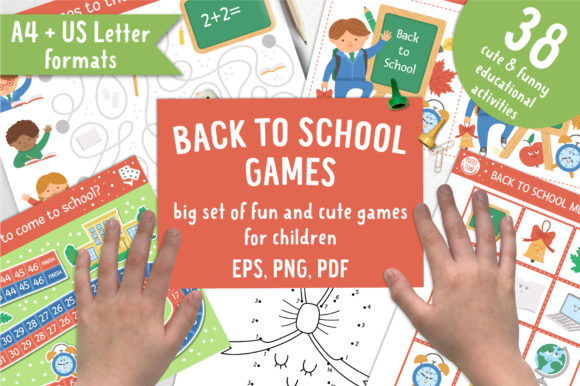
At its core, Back to School Games is a carefully assembled set of activity types designed around a unified theme of school life. The product features cute, funny characters—pupils, a teacher, kawaii school supply objects, a school bus, a school building, and many other familiar elements. But the real value lies in the range of cognitive and motor skill exercises it provides: mazes, board games, searching games, matching and counting activities, shadow match, cut and glue tasks, crossword puzzles, difference searching, coloring, dot-to-dot, and color by number worksheets. This breadth means one set can serve multiple purposes across different ages, skill levels, and learning moments.
What distinguishes this resource from generic activity books or free printables is its intentional design. All elements share a common color palette and style, which makes combining them seamless. The games come in two formats—A4 and US Letter (8.5 x 11 inches)—so no matter where you teach or live, you can print and use them without reformatting. Critically, the files are originally vector-based, meaning you can modify size, recolor elements, and adapt text. The text is editable in Adobe Illustrator, and PNG files with transparent backgrounds are included for even easier editing. This flexibility transforms a simple activity set into a customizable tool that can evolve with your needs.
Strategic Use Cases for Educators and Parents
The real power of Back to School Games emerges when you deploy it with clear intentions rather than as a filler activity. Consider the first week of school. Children walk into a classroom filled with new faces, new rules, and new expectations. Anxiety levels are high, and attention spans are low. A board game that requires cooperation or a simple matching activity can break the ice without demanding academic performance. It signals that school is a safe, enjoyable place where it is okay to be a beginner.
For teachers planning a full morning or afternoon, the variety within the set allows you to rotate activity types to sustain engagement. Start with a dot-to-dot worksheet to warm up fine motor skills, move to a crossword puzzle that introduces school-related vocabulary, then use a searching game to build observation and patience. The common color palette and style mean that even as you switch between activities, the visual experience remains coherent, reducing cognitive overload for young learners.
Homeschooling parents and small learning pods can use Back to School Games as a structured but low-pressure way to assess where each child stands. A color by number worksheet reveals color recognition and number familiarity. A maze shows problem-solving approach and pencil control. Shadow match exercises indicate visual discrimination skills. Instead of formal testing, you gather the same diagnostic information through play.
Aligning Activities with Developmental Goals
Thoughtful use of this resource requires connecting each activity type to a specific developmental or learning goal. Let me walk through how different games serve different purposes, so you can plan with precision.
Mazes and dot-to-dot worksheets build hand-eye coordination, sequencing, and forward thinking. A child navigating a maze must plan a route, anticipate dead ends, and adjust course—all skills that transfer directly to reading comprehension and mathematical reasoning. Color by number and matching activities reinforce symbol recognition, attention to detail, and patience. When a child matches a shadow to its object, they practice visual closure, a foundational skill for fluent reading.
Cut and glue tasks strengthen bilateral coordination and scissor control, which are essential for handwriting and self-care tasks like opening lunch packages. Board games introduce turn-taking, rule-following, and graceful winning and losing. These social-emotional competencies are as important as any academic skill, yet they are often neglected in traditional curricula. Back to School Games weaves them naturally into the day.
Crossword puzzles and difference searching activities encourage vocabulary building and sustained focus. For a teacher, observing which children persist through challenging puzzles and which give up quickly provides valuable insight into executive function development. You can then scaffold support for those who need it, either by pairing them with a peer or modifying the task difficulty.
Practical Planning Tips for the Classroom
To get the most out of Back to School Games, plan your usage in advance rather than pulling worksheets at the last moment. Here is a realistic approach I recommend to educators and content creators alike.
First, sort the activities by time requirement and complexity. A simple coloring page might take five minutes, while a board game with multiple players could run fifteen or twenty. Create a menu of options for different transition points in the day—morning arrival, after lunch, end-of-day wind-down. This prevents the scramble that often leads to random activity selection.
Second, use the editable vector files to customize content for your specific context. If you teach in a bilingual school, replace the English text with target vocabulary in both languages. If your class has a theme for the month, recolor the elements to match. The ability to modify size means you can enlarge a game for whole-class projection or shrink it for individual use at desks. The PNG files with transparent backgrounds let you drop characters into your own worksheets, newsletters, or classroom decorations, extending the resource well beyond the original set.
Third, consider using the games as rewards or incentives rather than mandatory work. A child who finishes an assignment early can choose a puzzle or board game from the set. This reduces downtime distraction and reinforces the idea that school activities are inherently enjoyable. Over time, children associate focus and completion with positive outcomes, building intrinsic motivation.
Risks of Using the Games Without Clear Context
No resource is immune to misuse, and Back to School Games is no exception. The most common mistake is treating it as a one-size-fits-all solution for every moment of classroom downtime. Handing out worksheets without connecting them to learning goals quickly turns a thoughtful tool into busywork. Children sense when an activity has purpose versus when it is merely filling time, and they respond accordingly with disengagement or resistance.
Another risk is relying too heavily on printable activities at the expense of social interaction and physical movement. While mazes and board games have real value, they should complement—not replace—discussion, group projects, outdoor play, and hands-on exploration. A balanced day includes both structured sit-down tasks and active learning experiences. Use Back to School Games as one layer in a larger ecosystem.
For entrepreneurs and creators who want to adapt these resources for commercial use, the vector format offers great flexibility, but you must consider your audience. A set designed for kindergarteners will not serve middle graders. The cute, kawaii style of the characters appeals strongly to early elementary children, but older students may find it patronizing. If you repurpose the files for products aimed at older age groups, adjust the visual tone and complexity accordingly.
Adapting for Different Learning Environments
The flexibility of Back to School Games makes it suitable for diverse settings beyond the traditional classroom. Tutors working one-on-one with struggling readers can use matching games to reinforce phonics without the pressure of a textbook. After-school program coordinators can set up board game stations that encourage peer bonding and cooperative play. Birthday parties with a school theme or classroom celebrations become more structured with prepared activities that keep children engaged and reduce chaos.
For homeschooling families, the set provides a ready-made bank of activities that align with multiple subjects. A color by number worksheet practices math and fine motor skills simultaneously. A crossword puzzle that uses school vocabulary reinforces spelling and reading. A cut and glue scene exercises following multistep instructions. Instead of piecing together resources from five different sources, you have a coherent set that supports cross-curricular learning with minimal prep time.
Content creators and small business owners can also find strategic value. If you sell educational printables, planners, or classroom resources on platforms like Teachers Pay Teachers or Etsy, the editable vector files allow you to rebrand and customize Back to School Games for your own product line. The transparent-background PNGs make it easy to incorporate characters into your branding, newsletters, or social media posts. The consistent style across all activities ensures that your offerings look professional and cohesive, which builds trust with buyers.
Long-Term Value and Sustainability
A well-designed activity set should not be used once and discarded. Back to School Games supports repeated use across multiple years and contexts because the activities are not date-specific. A maze about finding the school bus works just as well in September as it does in January. A board game about school supplies is relevant whenever you need to reinforce vocabulary or social skills. The editable text means you can refresh the content for a new group of students without starting from scratch.
For institutions with limited budgets, this longevity is significant. A single purchase can serve dozens of students across multiple years when the files are stored and reused. Because the games are vector-based, you can print them at different sizes, reuse individual elements in newsletters or classroom signs, and adapt them for different grade levels. The return on investment increases each time you access the set.
Consider also the environmental dimension. Instead of buying new activity books every year, you print only what you need, when you need it. The ability to modify size and content reduces waste because you are not discarding outdated or unused pages. This aligns with broader goals of sustainability and thoughtful resource management, values that resonate with many educators and families today.
Decision-Making Guidance for Prospective Users
If you are evaluating whether Back to School Games is right for your situation, ask yourself a few focused questions. What specific problem am I trying to solve? If the answer is simply "keep children busy," reconsider. The resource works best when you have a clear goal: ease the transition into school, assess baseline skills, build classroom community, or provide meaningful enrichment for early finishers. Each use case suggests a different set of activities and a different approach to facilitation.
Next, consider your own comfort with digital file editing. The vector files and editable text require Adobe Illustrator or a comparable program. If you are not familiar with vector software, the PNG files with transparent backgrounds are easier to use and still offer substantial flexibility. You can insert characters into Word documents, Canva designs, or Google Slides without specialized skills. Start with the PNG files and explore the editable versions as your comfort grows.
Finally, think about your audience's attention span and prior experience. A child who has never done a maze may need a simpler version or direct guidance for the first attempt. A group that is already familiar with board game rules can play independently while you observe or assist individuals. Differentiate your use of the set based on where your learners are, not just on what the activity is.
Approached with intention and planning, Back to School Games is not merely a collection of worksheets. It is a versatile, adaptable, and sustainable resource that supports joyful learning, thoughtful assessment, and classroom community building. Use it as a tool aligned with your broader educational or creative goals, and it will serve you and the children in your care well beyond the first week of school.