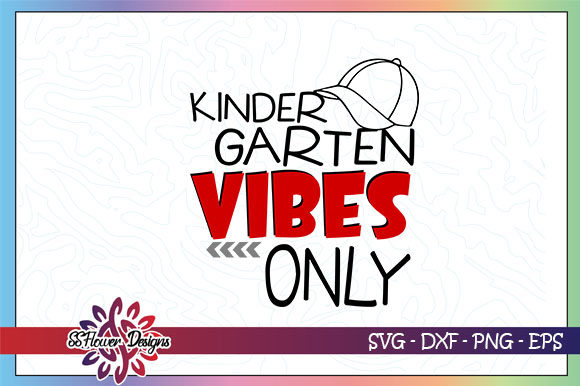
Kindergarten Vibes Only Back to School for Every Creator
There is something unmistakably joyful about the start of a new school year, especially when it involves the youngest learners. Kindergarten Vibes Only Back to School captures that energy through digital illustrations designed for cutting, printing, and crafting. These files come in SVG, PNG, DXF, and EPS formats at 300 PPI, making them compatible with tools like Cricut Design Space, Silhouette Studio, Sure Cuts A Lot, and Canvas. Whether you plan to cut vinyl for a t-shirt, etch a glass pane, or embroider a fabric tote, the set gives you a ready-to-use starting point.
Because the files are delivered in a compressed WinZip folder, you will need to unzip them after download. The actual design you receive is exactly as shown in the listing photo, without any watermark. Once you edit, resize, or convert the design, its quality depends on the tools and settings you choose. No vendor can guarantee how the artwork behaves after you alter it, so understanding your own workflow matters more than you might think.
Different people approach these files with completely different priorities. A hobbyist might care most about how easily the design cuts on the first try. A teacher might want to print multiple copies quickly for a classroom bulletin board. A small business owner might evaluate whether the design can be used commercially and how professionally it presents on finished products. Recognizing which lens you are using helps you decide whether Kindergarten Vibes Only Back to School fits your project, your skill level, and your goals.
What the design set actually includes and why it matters
The bundle contains one digital illustration file, but it is offered in four separate formats so you can choose the one that matches your software and machine. SVG files keep their clean vector edges no matter how much you scale them, which is critical if you plan to cut large wall decals or tiny iron-on labels. PNG files at 300 PPI give you a high-resolution raster option for printing or for use in programs that do not handle vectors. DXF and EPS files offer additional compatibility with older or professional-grade design software.
For anyone using a Cricut or Silhouette machine, the SVG format is usually the most straightforward. You upload the file directly into Design Space or Silhouette Studio, adjust the size to fit your material, and cut. The design arrives with clean paths, so you do not need to spend time cleaning up stray nodes or broken lines. That reliability matters especially if you are new to digital cutting and still learning how to troubleshoot misaligned cuts or curling vinyl.
If your primary use is embroidery, you will likely convert the SVG or EPS into a stitch file using embroidery digitizing software. The original vector acts as a clean source image, which helps your digitizing software trace the shapes accurately. Keep in mind that the design is not pre-digitized for embroidery, so you will need to handle that conversion yourself. Experienced embroiderers know this already, but beginners should budget extra time for the learning curve involved in converting a cut file into a stitch file.
How creators, hobbyists, and parents use these files differently
A parent preparing for the first day of school might want to make a custom shirt that reads Kindergarten Vibes Only with a playful rainbow or school bus illustration. Using heat-transfer vinyl, you cut the design with your machine, weed the excess material, and press it onto a cotton shirt. The whole project can take under an hour if your machine is already calibrated and your vinyl is good quality. For a parent, the emotional value of sending a child to school in a handmade shirt often outweighs any small imperfections along the edges.
A hobbyist crafter might use the same file to create a set of matching items: a pencil pouch, a lunch bag, and a water bottle label. Because the design is a vector, you can scale it up for a large tote or shrink it down for a small keychain charm. The flexibility of the file format matters more to hobbyists who like to coordinate multiple items for a single theme. You can also mirror the design if you are using infusible ink sheets, which require a reversed image for transfer.
Teachers and educators look at these files with a different set of priorities. A kindergarten teacher might print the design on sticker paper to label cubbies, notebooks, or supply bins. Printing from the PNG file is quick and does not require any cutting machine at all. You simply insert the image into a Word document or Canva design, resize it, and print. If you have access to a laminator, you can even turn the design into durable name tags for desks or door decorations. For classroom use, speed and ease of reproduction often matter more than the precision of a vinyl cut.
A school librarian or reading specialist might use the design to create a welcome sign for a literacy event or a parent orientation night. The playful kindergarten theme signals warmth and approachability, which helps ease the transition for both children and families. In this context, the file's professional look matters because you are presenting it to a group of adults. A clean, high-resolution print reflects well on the school and the educator who put it together.
Small business owners and commercial considerations
If you run a small shop selling custom apparel or classroom decor, you likely evaluate digital files based on commercial usability, customer appeal, and production efficiency. Kindergarten Vibes Only Back to School offers a ready-made design that you can apply to shirts, totes, hats, or banners. Because the file is a vector, you can scale it to fit toddler sizes or adult sizes without losing sharpness. That means you can offer the design across multiple product types without recreating the artwork.
Commercial use policies vary by seller, so always check the terms of the specific listing. Some designers allow unlimited commercial use, while others limit the number of physical products you can sell. If you plan to use the file as part of your regular product lineup, confirm the license details before purchasing. You may also want to keep a backup of the original unedited file in case your cutting software corrupts the paths during a future update.
Another factor that matters for business owners is production speed. If the design cuts cleanly on the first pass without needing manual node editing, you save time on each order. If you regularly produce batches of fifty or more shirts, even a few seconds of extra weed time per design adds up. Test the file on scrap vinyl before committing to a full production run. That small step can prevent frustration later, especially if your material is expensive or your deadline is tight.
Sellers who offer both physical products and digital patterns might also use the PNG version as a mockup image for listing photos. The high resolution means the design looks crisp on a screen, which helps customers visualize how it will appear on a finished item. Good presentation leads to fewer returns and more confident purchases, so the visual quality of the file contributes directly to your shop's reputation.
Beginners versus experienced users: different needs, same file
A beginner using a Cricut machine for the first time will benefit from a design that arrives with clean, closed paths. Open paths can cause cutting errors where the machine tries to cut a line that is not fully connected, resulting in jagged edges or partial cuts. Because Kindergarten Vibes Only Back to School is designed for cutting software, the paths should be ready to use. Beginners should still preview the design in their software before cutting, zoom in to check for tiny gaps, and run a test cut on cardstock to confirm alignment.
If you are new to unzipping files, remember that the download arrives as a compressed folder. On a Windows computer, right-click the folder and select Extract All. On a Mac, double-click the zip file to expand it. Once extracted, you will see individual files with .svg, .png, .dxf, and .eps extensions. Choose the one that matches your software and your project. Beginners sometimes try to open the SVG in a web browser and get confused when it does not cut. Always import the file into your cutting software directly.
Experienced users will likely want to customize the design before cutting. Because the file is editable, you can change colors, remove elements, add text, or combine it with other designs. In Adobe Illustrator or Inkscape, you can ungroup the paths, modify individual shapes, and save a new version. Experienced users also understand that converting the file to another format or editing it extensively can change how it cuts. Always test the modified version before cutting expensive materials like holographic vinyl or heat-transfer foil.
For users who want to embroider the design, the vector format provides a clean outline for digitizing. Experienced embroiderers might trace the SVG directly in software like Embrilliance or Hatch, adjusting stitch types and density for different fabric types. Beginners who want to embroider the design should look for a pre-digitized version or be prepared to learn how to convert the vector into a stitch file. The process is not difficult, but it does require practice and patience.
Quality, reliability, and long-term usefulness
The design is delivered at 300 PPI in the PNG version, which is the standard resolution for high-quality printing. If you enlarge the PNG significantly, you may notice pixelation, so for large banners or posters, use the SVG vector format instead. Vectors scale infinitely without quality loss, making them the better choice for any project where size might change later.
Reliability over time depends on how you store and manage your files. Keep the original unzipped folder in a dedicated cloud drive or external hard drive. If your computer crashes or your cutting software updates and breaks compatibility with older file versions, having the original SVG means you can always import it fresh. Label the folder clearly with the design name and date so you can find it years later when you want to make another project for a younger sibling or a new school year.
Long-term usefulness also depends on whether the design stays relevant to your audience. Kindergarten themes tend to be seasonal, but each year brings a new group of families and teachers looking for first-day-of-school designs. If you are a business owner, you can reuse the same file annually as long as the style remains current. If you are a parent, the design holds sentimental value because it marks a specific milestone. Keeping the file means you can reproduce the same shirt for a keepsake or a matching sibling set later.
Matching the design to your own project and goals
Before you buy, ask yourself what you actually want to make. If you need a single shirt for your own child, any version of the file will work. If you plan to sell fifty shirts at a school fair, you need a file that cuts cleanly at scale and a license that supports commercial use. If you are a teacher making classroom decorations, the PNG version printed on cardstock may be faster and cheaper than cutting vinyl. If you are a hobbyist who enjoys layering multiple vinyl colors, look at the design complexity to decide whether weeding will be tedious or relaxing.
Your skill level also guides which format to use. Beginners should stick with SVG for cutting or PNG for printing until they feel comfortable editing vector paths. Experienced users can push the design further by combining it with other elements, converting it for new materials, or resizing it unexpectedly. No matter your level, the design is intended to save you time so you can focus on the fun part of making something personal.
Kindergarten Vibes Only Back to School works best when you align it with your actual workflow. If you are comfortable with your machine, your material, and your editing software, the file will behave predictably. If you are still learning, give yourself grace to make a few test cuts and practice weeding before you move to your final product. The same design that feels complicated to a beginner can feel freeing to someone who already knows what they want and just needs a clean starting point.
By understanding how different people evaluate and use this design, you can decide whether it matches your project without guessing. The joy of a kindergarten-themed back-to-school craft comes not just from the final product, but from knowing you made it yourself with a file that was designed to help you succeed.