Why the Apple Back to School Concept Doodle Signals a Shift in Creative Productivity
Every year, as summer winds down and the academic calendar beckons, Apple introduces its back-to-school campaign. But in recent cycles, something more than a seasonal promotion has emerged. The Apple Back to School Concept Doodle — the playful, hand-drawn aesthetic that now accompanies much of Apple’s educational and creative messaging — has become a quiet but telling signal about how work, learning, and creativity are evolving. For professionals, creators, entrepreneurs, and marketers, this visual language is worth understanding — not just as a design trend, but as a reflection of deeper shifts in how we produce, communicate, and add value.
This article unpacks what the Apple Back to School Concept Doodle actually represents, why it resonates across industries, and what it reveals about the changing expectations of modern professionals.
What the Apple Back to School Concept Doodle Really Is
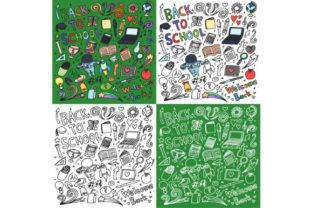
At its simplest, the Apple back to school concept doodle refers to the intentionally casual, sketch-like illustrations that Apple has woven into its back-to-season marketing. You see them in promotional videos, on the Apple Store education landing pages, and in social assets that accompany offers for students and educators. These doodles are not polished product shots or photorealistic renders. They are loose, expressive, often monochrome or lightly colored line drawings that depict ideas like note-taking, brainstorming, collaboration, and creation.
But this is not merely decoration. The doodle style serves a strategic purpose. It signals a mindset — one that favors exploration over perfection, process over polish. This aesthetic choice aligns directly with how Apple positions its products for the back-to-school audience: as tools for thinking, sketching, drafting, and iterating. The Apple Back to School Concept Doodle is a visual metaphor for the creative process itself, reminding viewers that every great outcome begins as a rough idea.
For the professional audience, this matters because the same principle applies beyond the classroom. In marketing, product development, content creation, and entrepreneurship, the ability to prototype quickly and communicate concepts visually is no longer optional. The doodle aesthetic validates a workflow that many knowledge workers and creators already rely on daily.
How It Fits into Broader Industry and Cultural Shifts
The emergence of the Apple Back to School Concept Doodle is not an isolated design choice. It sits at the intersection of several converging trends that are reshaping how people work and create.
The Rise of Visual Thinking in Professional Settings
Visual communication has moved from a niche skill to a core competency. Whiteboarding sessions, concept maps, wireframes, storyboards, and sketchnotes have become standard tools in strategy meetings, product planning, and content development. The doodle aesthetic used by Apple implicitly endorses this approach. By associating its hardware and software with hand-drawn ideation, Apple signals that its devices — especially the iPad and Apple Pencil — are purpose-built for the kind of fluid, visual thinking that drives modern innovation.
The Blurring Line Between Education and Professional Development
Back-to-school marketing traditionally targets students, but the line between student and professional has never been more porous. Lifelong learning, micro-credentials, side projects, and portfolio careers mean that many professionals are in a perpetual state of learning. The Apple back to school concept doodle recognizes this reality. The same person watching a back-to-school video might be a freelancer learning a new skill, a marketer prototyping a campaign, or an entrepreneur sketching out a business model. The doodle aesthetic speaks to anyone who is in the middle of a creative process — which, increasingly, means everyone.
The Authenticity Movement in Brand Communication
Consumers, and particularly professionals who make purchasing decisions, have grown skeptical of overly polished marketing. The raw, unfinished quality of a doodle communicates honesty and accessibility. Apple, a brand known for premium polish, deliberately adopting a rough sketch style is significant. It signals that the company understands the difference between the finished product and the creative journey. This resonates with creators and entrepreneurs who value process as much as outcome.
Why People Are Paying Attention to This Concept
The Apple Back to School Concept Doodle has gained attention not because it is loud, but because it is precise. It captures a mood that many professionals recognize but struggle to articulate.
- It validates imperfection as part of the creative process. In an era of high polish — filtered photos, refined portfolios, curated feeds — the doodle reminds us that every strong idea starts somewhere rough. For professionals who produce written content, designs, or strategies, this is a liberating message.
- It reinforces the role of tools as creative partners. When Apple uses doodles to market iPads and Macs, it subtly positions these devices not as consumption machines but as creation engines. This framing matters to anyone who uses technology to produce, not just consume.
- It mirrors the way people actually work. Most professionals do not produce final drafts in one pass. They sketch, write, revise, brainstorm, and iterate. The doodle aesthetic normalizes this nonlinear workflow, making it visible and valued in a way that polished imagery never could.
Marketers and brand strategists are paying attention because the doodle strategy bypasses traditional advertising skepticism. It feels personal, almost like a note from a friend. For freelancers and entrepreneurs building their own brands, this offers a lesson: sometimes the most effective communication is the least finished.
Changing Needs, Preferences, and Workflows That Make It Relevant
Professionals today operate under different constraints and expectations than a decade ago. Several shifts make the Apple Back to School Concept Doodle particularly relevant.
Speed and Iteration Over Perfection
Modern work cycles are shorter. Whether you are launching a campaign, designing a product feature, or writing a newsletter, the pressure to ship quickly is intense. The doodle aesthetic celebrates speed — it is fast, expressive, and low-stakes. This aligns with agile methodologies, lean startups, and content marketing calendars that demand volume and velocity. The Apple back to school concept doodle visually reinforces what many professionals already practice: produce, learn, iterate, repeat.
The Need for Cross-Functional Communication
Collaboration across departments — marketing, engineering, sales, creative — requires shared visual language. Doodles and sketches are universal. They transcend jargon and expertise. Apple’s use of doodles in its back-to-school materials models how complex ideas can be communicated simply. For professionals leading teams or pitching ideas, this is a reminder that a simple sketch often communicates more than a slide full of bullet points.
Remote and Hybrid Work Demands New Communication Tools
With distributed teams, the ability to express ideas visually has become critical. Digital whiteboards, collaborative notebooks, and drawing apps have become essential tools. The Apple Back to School Concept Doodle normalizes this mode of working. When Apple shows an iPad user sketching a quick diagram during a brainstorming session, it validates the digital doodle as a legitimate professional tool, not a casual pastime.
Practical Examples and Observations
Consider a marketing team planning a campaign. In the past, they might have started with a brief and a deck. Today, many teams begin with a messy whiteboard — either physical or digital — where ideas are sketched, connected, and discarded. The Apple back to school concept doodle mirrors exactly this workflow. It is not a final ad. It is the thinking behind the ad.
Or consider a freelance designer pitching a logo concept. Instead of delivering three polished options, many now share rough sketches or conceptual doodles early in the process to align on direction before investing time in refinement. This approach saves time, reduces revisions, and builds trust. Apple’s doodle style, applied to its own marketing, makes this method feel mainstream and accepted.
Even in written content creation, the doodle philosophy applies. A strong article often begins as a messy outline, a collection of fragments, or a mind map. The final piece is polished, but the process was not. The Apple Back to School Concept Doodle celebrates that messy middle — something every writer, strategist, and creator can relate to.
Connecting the Topic to Larger Developments
The Apple Back to School Concept Doodle is part of a broader trajectory in which the tools and aesthetics of creativity are democratized. As artificial intelligence begins to handle more routine production tasks, the uniquely human ability to imagine, sketch, and hypothesize becomes more valuable. The doodle aesthetic is a celebration of raw human cognition — the opposite of algorithmic perfection.
Moreover, the rise of the creator economy has elevated anyone who produces original work. The Apple back to school concept doodle speaks directly to this group. Whether you are a YouTuber sketching video ideas, a writer outlining chapters, or a marketer brainstorming campaign angles, the doodle validates your process.
Apple itself has invested heavily in creative tools — the Apple Pencil, iPadOS, Freeform, and apps like Procreate and Notes — that support the kind of fluid ideation the doodle represents. The company’s back-to-school campaign is not just selling devices; it is selling a way of working that prioritizes creativity, flexibility, and iteration. For entrepreneurs and professionals, that value proposition is far more compelling than any hardware spec sheet.
In a world where attention is scarce and polish can feel hollow, the Apple Back to School Concept Doodle offers something unexpected: permission to be unfinished, to think on the page, to share rough ideas with confidence. That message, delivered by one of the most refined brands on the planet, has implications far beyond a seasonal promotion. It speaks to the way work is actually done — and to the value of staying in the draft a little longer.
For professionals across industries, the takeaway is straightforward: embrace the doodle mindset. Sketch your ideas before you finalize them. Share your process as freely as your outcomes. And recognize that the most powerful tool in your workflow is not the software you use, but the willingness to start before you are ready. The Apple back to school concept doodle is more than a marketing motif — it is a strategy for how to think, create, and lead in an increasingly visual and iterative world.