Doodle Back to School with Mathematic: Blending Creative Visuals with Numerical Thinking
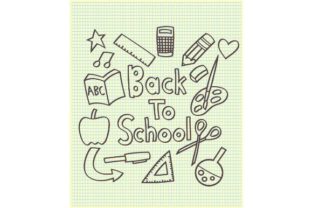
The start of a new academic season often comes with a mix of anticipation and a desire to make learning feel fresh. Among the many visual trends that have emerged to support this transition, the concept of a doodle back to school with mathematic theme has gained notable traction. Rather than relying on sterile graphs or intimidating equations, this approach wraps mathematical concepts in playful, hand-drawn aesthetics. The result is a visually engaging environment that reduces cognitive friction and invites learners of all ages to explore numbers, patterns, and logic without the usual pressure.
At its core, a doodle back to school with mathematic background is not merely decorative. It serves as a bridge between abstract reasoning and visual comfort. By integrating sketches of geometric shapes, algebraic symbols, measurement tools, and numeric sequences into a single cohesive backdrop, educators and designers create a space where math feels approachable. This article examines the real-world relevance of this trend across multiple domains—from classroom settings and digital content creation to professional productivity and hobbyist exploration.
Why Doodle-Style Math Backgrounds Resonate Across Audiences
The appeal of a doodle back to school with mathematic design lies in its ability to communicate complexity through simplicity. Doodles, by nature, feel unpolished and spontaneous. When combined with mathematical elements, they soften the perceived difficulty of the subject. For professionals designing educational materials, this visual language signals that math is not a barrier but a playground. For creators producing social media content or printable planners, these backgrounds provide a context that is both thematic and intellectually stimulating.
Consider how a doodle back to school with mathematic background might be used in a video call backdrop for a tutoring session. Instead of a plain wall or a generic nature scene, the doodle-infused background subtly reinforces mathematical thinking throughout the interaction. The student sees fractions sketched as pizza slices, geometry doodles as overlapping shapes, and number lines winding playfully across the frame. This constant, gentle exposure helps normalize mathematical language in everyday settings.
For hobbyists and lifelong learners, the same backgrounds appear in bullet journals, study planners, and digital note-taking apps. The doodle aesthetic removes the formality that often accompanies math, making it easier to engage with concepts during personal study time. The versatility of this visual style means it works equally well for a first grader learning addition and an adult revisiting statistics for professional development.
Educational Applications: From Classroom Walls to Digital Worksheets
Teachers have long understood that environment influences learning outcomes. A doodle back to school with mathematic theme transforms classroom walls, bulletin boards, and handouts into interactive visual aids. Unlike traditional posters that present math as a set of finished facts, doodle-style materials invite students to add their own marks, connect ideas, and personalize their learning space. This participatory quality is one of the key advantages of the doodle approach.
When educators design worksheets or digital assignments using a doodle back to school with mathematic background, they accomplish several objectives simultaneously. First, the visual element reduces the starkness of a blank page, which can intimidate students who struggle with math anxiety. Second, the doodles provide contextual cues—a sketched protractor reminds the student to measure angles, while a doodled graph suggests coordinate plotting. Third, the playful tone encourages exploration rather than rote memorization.
In practice, a teacher might create a multi-section review sheet where each problem set sits inside a doodled shape—a circle for geometry questions, a spiral for sequence patterns, a grid for algebraic expressions. The background itself becomes a mnemonic device. Students begin to associate certain doodle motifs with specific mathematical operations, strengthening recall through visual association.
For remote and hybrid learning environments, the doodle back to school with mathematic aesthetic is particularly valuable. Digital platforms often struggle to replicate the warmth of a physical classroom. By using doodle backgrounds in slides, interactive whiteboards, and assignment templates, educators inject a sense of handcrafted care into the digital experience. This can improve student engagement and reduce the transactional feel of online education.
Design and Content Creation: Practical Workflows for Creators
Creators and designers who produce educational content, printables, or digital assets frequently turn to the doodle back to school with mathematic background as a flexible visual foundation. The hand-drawn quality pairs well with modern flat design, offering a contrast that feels both nostalgic and contemporary. Whether the final product is a branded workbook, a YouTube video thumbnail, or a set of Instagram story templates, the doodle math theme provides instant thematic clarity.
One effective workflow involves layering a doodle back to school with mathematic pattern as a subtle watermark or full-page texture, then overlaying clear, readable text and instructional elements. The doodles should remain at a lower opacity or be distributed in a way that does not compete with the primary content. For example, a math tutoring company might use a background featuring doodled compasses, rulers, and pi symbols in a soft monochrome tone, ensuring that the foreground information remains highly legible.
Another use case is in printable study kits. A doodle back to school with mathematic background can be applied to flashcards, cheat sheets, and progress trackers. The doodle elements serve as visual anchors—each card might have a unique doodle cluster that corresponds to a topic area (e.g., fractions, decimals, percentages). When students sort or review their cards, the doodles provide an additional layer of organization.
For digital content creators, the background can be animated. A subtle looping animation of doodled numbers floating upward or geometric shapes rotating slowly can make explainer videos more engaging without being distracting. The key is to maintain the doodle's hand-drawn charm while ensuring the mathematical content remains the focal point.
Cognitive and Psychological Benefits of Doodle-Infused Math Materials
Research in educational psychology supports the idea that visual environments affect learning readiness. The use of a doodle back to school with mathematic design taps into several cognitive principles. First, the concept of cognitive offloading suggests that when information is presented visually, the brain has fewer demands on working memory. Doodles act as external memory aids, reducing the effort needed to recall formulas or problem-solving steps.
Second, doodling itself has been linked to improved focus and information retention. When learners are surrounded by a doodle back to school with mathematic background, they may feel permission to doodle alongside their work, further reinforcing neural pathways. This is especially relevant for kinesthetic learners who benefit from physical engagement with concepts.
Third, the informal aesthetic reduces math anxiety, a well-documented barrier to achievement. A background that looks like a notebook margin filled with playful sketches signals that it is acceptable to make mistakes, experiment, and think aloud. This psychological safety is critical for developing mathematical resilience.
For adults using math in professional contexts—such as data analysts, engineers, or business owners revisiting statistical concepts—the doodle style can similarly lower the emotional barrier. A training presentation that uses a doodle back to school with mathematic background feels less like a lecture and more like a collaborative exploration. The visual informality encourages questions and discussion, which are essential for deep understanding.
Practical Considerations for Implementing Doodle Math Backgrounds
While the benefits are substantial, effective use of a doodle back to school with mathematic theme requires attention to design principles. Not every doodle background is suitable for every context. Factors such as age group, content density, and medium (print versus digital) should guide the selection and customization of the background.
For younger learners (elementary to middle school), doodles should be colorful, large, and directly related to the mathematical concepts being taught. A background featuring doodled animals counting objects or simple shape patterns works well. For older students and adults, a more subdued palette with abstract symbols—such as doodled integrals, matrix brackets, and statistical curves—maintains sophistication while still benefiting from the hand-drawn approach.
In print materials, ensure the doodle back to school with mathematic background does not interfere with text legibility. Use high-contrast combinations: dark doodles on a light background or light doodles on a dark background, depending on the overall tone. For digital screens, consider responsive scaling so that doodle elements remain proportional across devices, from smartphones to interactive whiteboards.
Another consideration is cultural relevance. Mathematical symbols and notations are largely universal, but doodle styles can carry cultural connotations. A doodle back to school with mathematic design intended for an international audience should favor neutral, widely recognized symbols and avoid region-specific visual jokes or references.
Observations from Real-World Implementation
Educators who have adopted a doodle back to school with mathematic background in their classrooms report noticeable shifts in student behavior. Students linger longer at bulletin boards, ask more spontaneous questions about the doodled symbols, and often begin adding their own doodles to worksheets. One middle school teacher observed that a simple doodle border featuring geometric shapes led to a classroom discussion about tessellations that was not part of the original lesson plan—a happy accident born from visual curiosity.
In the realm of professional development, a corporate trainer used a doodle back to school with mathematic background for a session on data literacy. Participants, many of whom had not studied math in years, responded positively to the informal visuals. Several commented that the doodles made the material "less scary" and helped them remember key terms like median and standard deviation. The trainer noted that post-session quiz scores improved compared to previous cohorts who had seen only standard slides.
Content creators on platforms like Etsy and Teachers Pay Teachers have also found commercial success with products featuring this theme. Printable planner stickers, monthly calendar templates, and subject-specific notebooks that incorporate a doodle back to school with mathematic design consistently receive high ratings and repeat purchases. Users frequently cite the "friendly" and "inviting" appearance as a deciding factor.
Trends and Future Directions for Doodle Math Aesthetics
The popularity of the doodle back to school with mathematic trend is part of a larger movement toward humanizing educational content. As artificial intelligence and digital tools become more prevalent, the desire for handcrafted, imperfect visuals grows. Doodles represent a counterbalance to the polished, automated look of many modern learning platforms.
Looking ahead, we can expect to see more interactive doodle backgrounds—where users can click or tap on a doodled element to reveal a math hint, a definition, or a mini-puzzle. Augmented reality (AR) applications might allow students to point a device at a doodle back to school with mathematic background and see the doodles animate into three-dimensional models. For example, a doodled cube could transform into an interactive 3D shape that the student can rotate and explore.
Personalization will also become more important. Future versions of doodle back to school with mathematic background assets may allow users to input their current math topic—such as trigonometry or linear algebra—and receive a custom doodle set tailored to that subject. This would increase the relevance and instructional value of the background while maintaining the playful aesthetic.
For businesses and brands, incorporating this visual style into product packaging, instructional inserts, or promotional materials can signal a commitment to approachable education. A toy company that sells math-based games, for instance, could use a doodle back to school with mathematic theme on its boxes to communicate that learning and play are intertwined.
Who Benefits Most from This Visual Approach
The audience for a doodle back to school with mathematic background is remarkably broad. Educators at every level—from preschool through university—can adapt the style to their subject matter. Parents helping children with homework can use doodle-themed printables to make practice sessions less stressful. Tutors and learning centers can brand their materials with a consistent doodle identity that sets them apart from competitors.
Professionals in fields that rely on quantitative thinking—engineers, accountants, data scientists—may find that a doodle back to school with mathematic desktop wallpaper or notebook cover serves as a subtle daily reminder to approach problems with creativity and patience. Hobbyists who enjoy puzzles, coding, or mathematical art can use these backgrounds as a starting point for their own creations.
Even business owners and marketers can benefit. A doodle back to school with mathematic background used in a newsletter, webinar, or social media campaign communicates that the brand values clarity, curiosity, and continuous learning. In an era where consumers are drawn to authentic and helpful content, this visual language builds trust and recognition.
Bringing It All Together: The Enduring Value of Doodle Math Visuals
The doodle back to school with mathematic phenomenon is more than a passing aesthetic trend. It reflects a deeper understanding of how people learn, process information, and connect emotionally with content. By combining the spontaneity of doodles with the precision of mathematics, this visual style creates a space where logic and creativity coexist.
Whether you are an educator designing next week's lesson, a content creator building a product line, or a professional seeking to make math feel less intimidating, the doodle back to school with mathematic background offers a practical, evidence-informed tool. Its strength lies not in ornamentation for its own sake, but in its ability to transform the experience of engaging with mathematical ideas. The doodle says: this is a place where you can think, try, and even play. And that is exactly the invitation that learners of all ages need.
As the boundaries between work, school, and personal development continue to blur, visual tools that serve multiple purposes will become increasingly valuable. The doodle back to school with mathematic theme is positioned to remain relevant because it adapts to the user's needs—whether that means decorating a classroom, organizing a study session, or simply making math a little more human.